
‘The Gift Box’ Implementation Project
Category: Mental Wellbeing Innovation
Target audiences: Mental Health Clinicians (including people working in forensic settings); Peer support workers
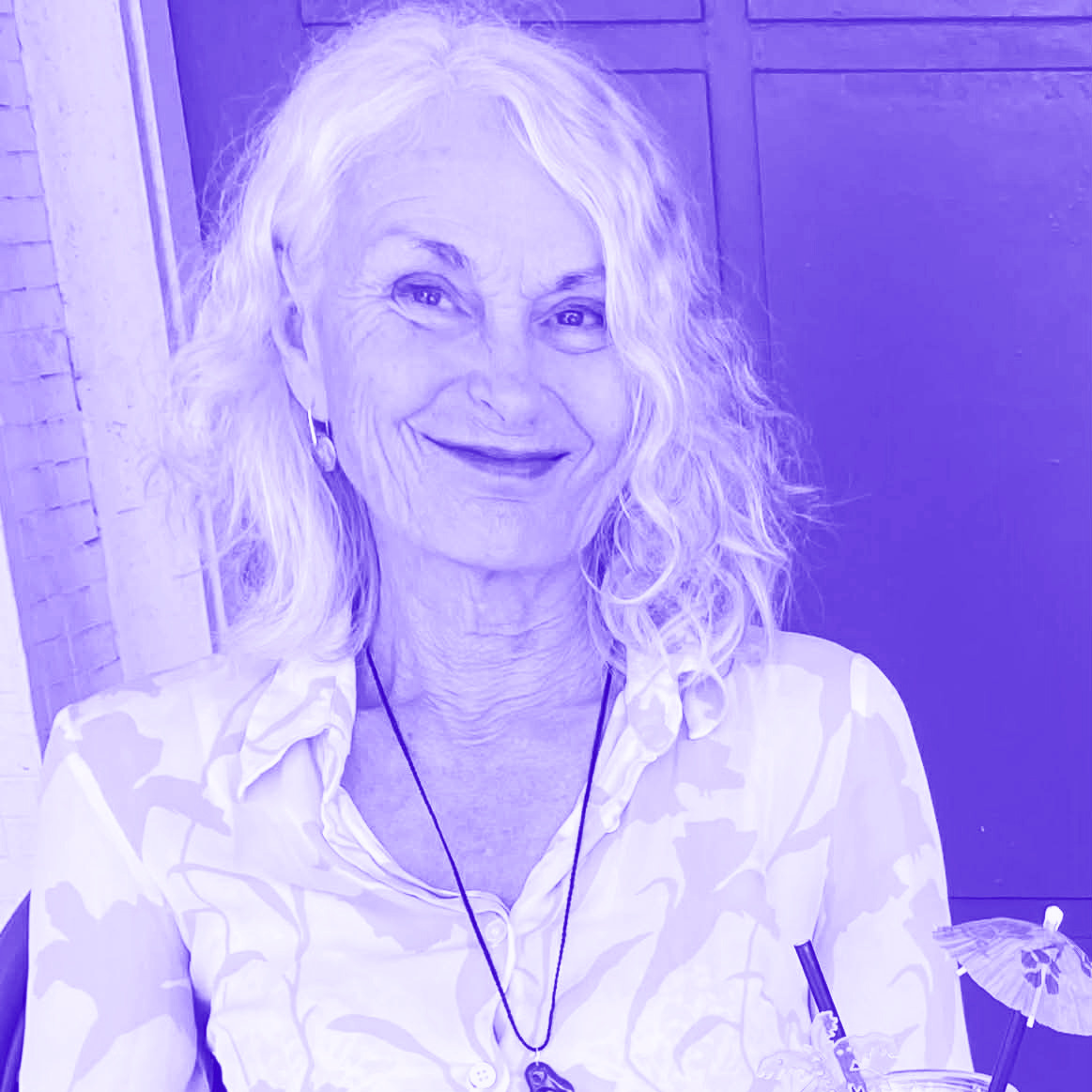
Research innovator: Dr Patte Randal LRCP MRCS DPhil
I am the primary developer and researcher in the evolution of ‘The Gift Box’. I have lived experience of recovery from extreme states and have found all elements contained in ‘The Gift Box’ valuable both in my personal life and in my clinical work. Now retired from clinical practice, I have the passion to contribute my time and energy to this initiative.
I want to thank Darryl Bishop and Ember Korowai Takitini for their generous support of this project.
— Dr Patte Randal


The project
For 25 years researcher and mental health innovator Dr Patte Randal has been at the helm of developing 'The Gift Box’ – a unique innovative recovery-focused tool, designed in accordance with evidence-based practice and informed by the wisdom of lived-experience of recovery, including the researcher’s own. Aspects of the resources in 'The Gift Box’ were co-designed by Maori service-users.
'The Gift Box’ is a tool that can be used by clinicians, but also fills a gap in the peer support world. It is found to be helpful in forensic settings as well as in community settings and can be used in schools. It can create a context for family education that can potentially help reduce high-expressed emotion, and build relational skills.
Ember Innovations research funding supported the creation and improvement of pathways towards widespread implementation of the second edition of 'The Gift Box’. The third edition is now in development and will soon be available (see https://thegiftbox.org.nz/)
Project Background
'The Gift Box’ is based on the ‘Re-covery Model’ framework, which Dr Randal co-developed. The Re-covery Model framework integrates elements of evidence-based practices such as:
CBT
DBT
a strength-based approach
a solution-focused approach
trauma-informed care.
It also supports dialogical, collaborative, person-centred recovery-focused practice. It includes a narrative component, which in turn facilitates improvement in the quality of the therapeutic alliance, that has itself been shown to improve outcomes.
This educational and therapeutic approach had been implemented in various clinical and peer support settings. Its effectiveness was evaluated by continuous multimethod feedback, including:
9 informal action research contexts
468 formal feedback surveys/questionnaires from staff and clients
2 formal qualitative and quantitative research contexts (Asian MH; Peer Support training).
This process culminated in the development of the first edition of 'The Gift Box’, leading to a successful pilot evaluation of the first edition of 'The Gift Box’ in Waikato DHB 2018-19.

Ember Innovations research funding supported:
Follow-up with the people who had received or used the first edition of ‘The Gift Box’ and continued evaluation of usefulness, and the barriers to its implementation.
The manufacture of the second edition version of the Manual, Workbook and revised posters and distribution to Gift Box practitioners/Gift Box partners who wanted to upgrade to the second edition of 'The Gift Box’.
Manufacture and distribution of 50 copies of the second edition of 'The Gift Box’ to appropriate settings in cost-effective ways.
A short video supporting the implementation of 'The Gift Box’.
Findings, insights and outcomes
This resource has the potential for improvement and possibly prevention of serious mental health outcomes.
The most exciting finding of the research is that 'The Gift Box’ can be effectively used by peers with no clinical training, with peers who they are supporting. These peers are motivated themselves to use the resources to support others.
Feedback gleaned to date has informed production of the third edition of 'The Gift Box’ on a wider scale at low cost to ensure national and international availability. It has the potential to become self-funding eventually.
Widespread availability of the third edition of 'The Gift Box’ could potentially provide access to this helpful resource in settings such as community houses, primary care, prisons and schools. NGO’s employing peers are beginning to ask for and implement 'The Gift Box’, including an NGO in Sydney, Australia.
Feedback
from service-users, family members, peers and clinicians
From a clinician point of view I have found ‘The Gift Box’ a really valuable tool to help our service users build an awareness of themselves and guide their recovery journey. It is very empowering and allows them to take control of their lives and well-being. I like that it normalises people’s experiences and that it is a part of being human. People really value the cards to prompt their thinking. It has also helped me to reflect on myself and be open to sharing my own experiences and I feel this has helped me become a better clinician myself. I would use it with everyone I work with if I could! Thanks for sharing this with us Patte.
— Clinician, Waikato DHB
Taking part in 'The Gift Box’ group has been a key part in my recovery journey with mental illness. It has enabled me to identify triggers that I otherwise wasn’t aware of. I was able to become more aware of my early warning signs and identify strategies to use to stop these developing into vicious cycles that would keep me deeper in my depressive cycle.
Learning to be more aware of behaviours that I engage in when I am at my best has helped me to realise that sometimes I am actually coping better with events in my life than I thought I was. This has given me confidence to start challenging the beliefs that I won’t change and that I will be stuck in this hole forever because I have now experienced glimpses of being free from my illness and I now understand that I am the only one that can change things. I am grateful for the opportunity to participate in ‘The Gift Box’ and am very thankful for the tools it has given me.
— Service user, Waikato DHB
NGO Peer Support:
With the limited time we have to spend creating purposeful and engaging material for our groups, 'The Gift Box’ is a god-send. It means we can concentrate on the face-to-face work with our peers, rather than spending hours and hours trying to put together resource. We have several staff who are exceptionally good at facilitating group spaces but the creating of material and resources can often be more challenging and as I mentioned, time-consuming.
Love the workbooks, they are a hit. Having something to write in, see visual examples of, and take away from the group to reflect on, build on and return to later is always of value. Building a Bridge of Trust, Map of the Journey of Re-covery, Mapping our patterns – having these as visual aids in a session and having group guidelines clearly defined and outlined with a pathway for delivery of each session. Once again this is incredibly valuable. This also means that we can have any facilitator pick up 'The Gift Box’ and run with it. Feedback from our facilitators is that having everything written out so clearly, supports their confidence in delivering the material.
We have also used 'The Gift Box’ in a 1-1 setting with peers who want to put together a wellbeing plan. The guided plan and visual material, and once again, having your own workbook to fill out. We have used this a few times now with peers, and would like to have a box that we could assign to our smaller meeting room to use solely for this purpose. Vicious Cycle/Victorious Cycle – The sessions assigned to these topics are the most often flagged as being the stand out for people, both in groups and in 1:1 support. It is regularly communicated that this is something that has never been talked through with them before.
Related publications and resources
Books
Randal, P. & Stanton, J., 2022. Finding hope in the lived experience of psychosis: Reflections on trauma, use of power and re-visioning psychiatry. London: Routledge.
Journal articles
Randal, P., Simpson, A.I.F. & Laidlaw, T., 2003. Can recovery-focused multimodal psychotherapy facilitate symptom and function improvement in people with treatment-resistant psychotic illness? A comparison study. Australian and New Zealand Journal of Psychiatry, 37(6), pp.720–727.
Randal, P., Stewart, M., Proverbs, D., Lampshire, D., Symes, J. & Hamer, H., 2009. The Re-covery model: An integrative developmental stress-vulnerability-strengths approach to mental health. Psychosis, 1(2), pp.122–133.
Websites